


Greetings, and welcome to the RLRH newsletter.
Most runners have a reasonable expectation that all those miles are doing something good for their hearts.
Our resting heart rates fall. Paces that once felt difficult become comfortable. We develop the capacity to move more oxygen, sustain more work, and recover faster.
Then a study comes along showing that lifelong endurance athletes have more plaque in their coronary arteries than people who exercise much less.
That’s a difficult finding to reconcile with everything we know about the benefits of running. It’s also a topic I keep returning to, partly because the physiology is fascinating and partly because I’m a lifelong endurance athlete with no plans to stop.
The question is worth taking seriously: How can endurance exercise improve cardiovascular health while being associated with more coronary atherosclerosis?
After following this research for years, I think the most useful answer begins with separating things we often treat as interchangeable: how well the heart performs, what its arteries look like, and the likelihood of having a cardiovascular event.
They’re related. But each tells us something different.
A strong heart can still have plaque
Endurance training changes the heart’s structure and function. The term athlete’s heart describes adaptations that help it accommodate and pump the large volumes of blood required during exercise.
For example, a recent study comparing endurance athletes with controls found that athletes maintained larger stroke volumes—the amount of blood pumped per beat—even as rising heart rates shortened the time available for filling. That helps explain their greater cardiac output during exercise. These are useful adaptations for endurance performance.
Coronary atherosclerosis concerns the arteries supplying that heart muscle. Plaque develops within their walls and can contain varying amounts of lipid, fibrous tissue, and calcium.
A coronary artery calcium scan measures the calcified component. Its result, the CAC score, provides information about atherosclerotic burden and future cardiovascular risk. A different examination, coronary CT angiography, uses contrast to show additional features, including noncalcified plaque and narrowing of the arteries.
A heart can be exceptionally good at supporting a marathon while its coronary arteries still contain plaque. So your ability to run well tells you something valuable about your physiology. It doesn’t tell you everything…

One influential finding came from the original MARC study, which examined 284 male recreational and competitive athletes, averaging 55 years old.
Researchers used CT scans and questionnaires about lifelong exercise habits. Among the highest-volume exercisers, 68% had detectable coronary calcium, compared with 43% in the lowest-volume group. Coronary plaque was present in 77% versus 56%, respectively.
But there was a potentially reassuring detail: among athletes with plaque, the highest-volume group more often had exclusively calcified plaque and less often had mixed plaque.
That helped establish an appealing explanation. Perhaps athletes had more plaque, but a greater proportion was relatively stable and less likely to rupture. The problem was how easily “potentially more stable” became “nothing to worry about.”
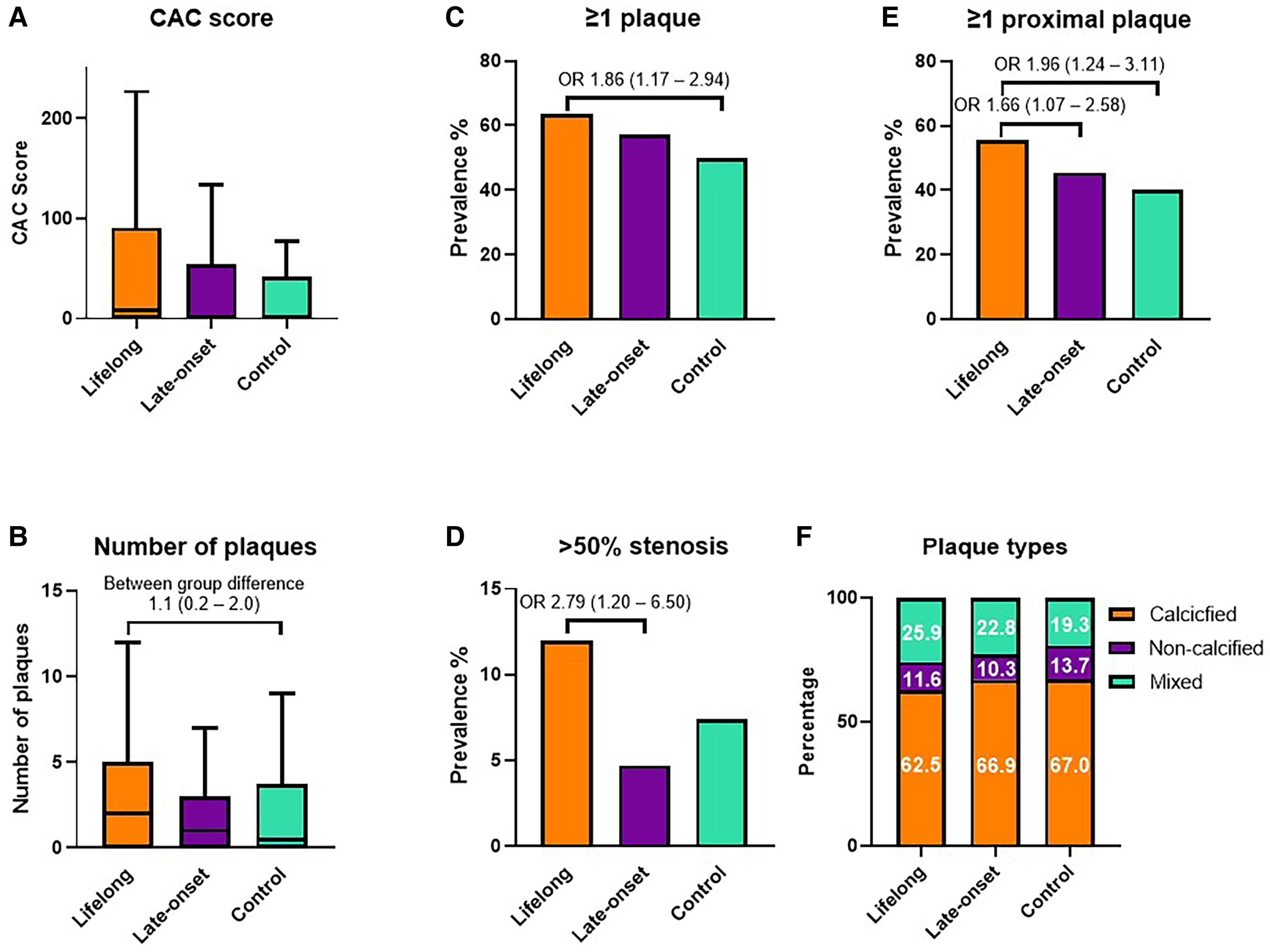
The 2023 Master@Heart study complicated that interpretation. It compared 191 lifelong endurance athletes, 191 athletes who began after age 30, and 176 healthy nonathletes. All were men, averaging about 56 years old. The athlete groups trained roughly 10–11 hours weekly, versus about one hour among controls.
Using coronary CT angiography, researchers found at least one plaque in:
63.4% of lifelong athletes
57.1% of later-starting athletes
50.0% of controls
After adjustment for cardiovascular risk factors, lifelong athletes had higher odds of calcified, noncalcified, and mixed plaque than controls. Their plaque composition wasn’t uniquely favorable.
There was nuance: overall plaque burden remained relatively low, and plaques meeting the study’s definition of “vulnerable” were uncommon. The comparison was also cross-sectional, so it couldn’t establish that training caused the differences—or that athletes would subsequently have more heart attacks.
Plus, participants were White men, predominantly cyclists, and controls were unusually healthy. That limits how confidently we can apply the findings to women, other populations, or every recreational runner.
My interpretation is that we should retire the blanket reassurance that athletes simply have harmless plaque. The evidence is more complicated than that.
What mileage and intensity actually tell us
The next question is whether continuing to train predicts how plaque changes over time.
